The website will be offline from Wednesday the 28th of October 2026 at 8:00 AM to Wednesday the 28th of October 2026 at 12:00 PM for maintenance. We apologize for any inconvenience this may cause.
Product Descriptions
Prefire Image
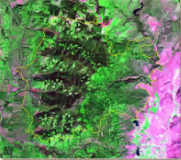 Prefire scenes are comprised of Landsat TM/ETM+/OLI or Sentinel-2 MSI data and are selected to match the seasonality and phenology of the postfire image chosen. This layer is clipped to a 3km-buffered bounding box around the burn area boundary.
File Format: GeoTiff
File name: <Fire ID>_<prefire image date>_<sensor>_refl.tif
Postfire Image
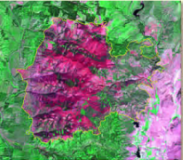 Postfire scenes are comprised of Landsat TM/ETM+/OLI or Sentinel-2 MSI data and are selected for either an initial or extended assessment for mapping. The assessment type chosen is dependent on the affected ecosystem and its response to fire. This layer is clipped to a 3km-buffered bounding box around the burn area boundary.
File Format: GeoTiff
File name: <Fire ID>_<postfire image date>_<sensor>_refl.tif
NBR/dNBR/RdNBR Images
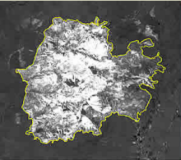 NBR, dNBR, and RdNBR images are created for each fire depending if the fire was mapped using a single scene (NBR) or two scene (dNBR/RdNBR) mapping strategy.
File Format: GeoTiff
File name:
<Fire ID>_<postfire image date>_nbr.tif
<Fire ID>_<prefire image date>_<postfire image date>_dnbr.tif
<Fire ID>_<prefire image date>_<postfire image date>_rdnbr.tif
Thematic Burn Severity
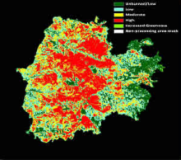 Burn severity layers are thematic images depicting severity as unburned to low, low, moderate, high, and increased greenness (increased postfire vegetation response). The layer may also have a sixth class representing a mask for clouds, shadows, large water bodies, or other features on the landscape that erroneously affect the severity classification.
File Format: GeoTiff
File name:
<Fire ID>_<postfire image date>_nbr6.tif
<Fire ID>_<prefire image date>_<postfire image date>_dnbr6.tif
Fire Perimeter & Mask
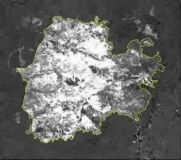 Burned area boundary as detected by using the prefire and postfire images, and the NBR, dNBR and RdNBR images. For areas intersecting the fire with clouds, shadow, snow or anomalies, a mask is also generated.
File Format: ESRI shapefile
File name:
<Fire ID>_<prefire image date>_<postfire image date>_burn_bndy.shp
<Fire ID>_<prefire image date>_<postfire image date>_mask.shp
FGDC Metadata
The FGDC-compliant metadata for each fire is captured in text file format and includes the geospatial information and associated datasets used to map the fire.
File Format: Text document
File name: <Fire ID>_<prefire image date>_<postfire image date>_metadata.txt
Fire Map
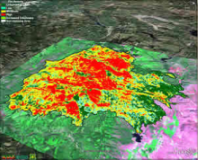 Two visualization products are created for each fire, one in PDF format and another in KMZ format. The PDF map portrays the postfire image and fire severity summarized by severity class and associated acres. The KMZ map displays prefire, postfire, fire severity and burn perimeter layers.
File Format: PDF and KMZ
File name:
<Fire ID>_map.pdf
<Fire ID>_<prefire image date>_<postfire image date>.kmz
National - Burned Area Boundaries Dataset
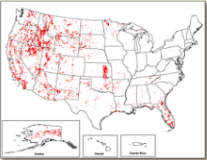 The burned area boundaries dataset is a vector polygon
 National - Fire Occurrence Dataset
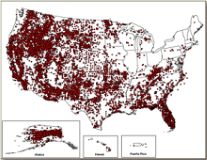 The fire occurrence location dataset is a vector point
 National - Burn Severity Mosaics
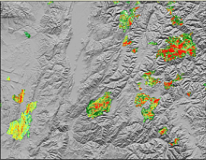 The burn severity mosaics consist of thematic raster images of MTBS burn severity classes for all currently completed MTBS fires for the continental United States, Alaska, Hawaii and Puerto Rico. Mosaicked burn severity images are compiled annually for each year by US State and the continental United States.
File Format: GeoTiff
File name: mtbs_<selected area>_<selected year>.zip